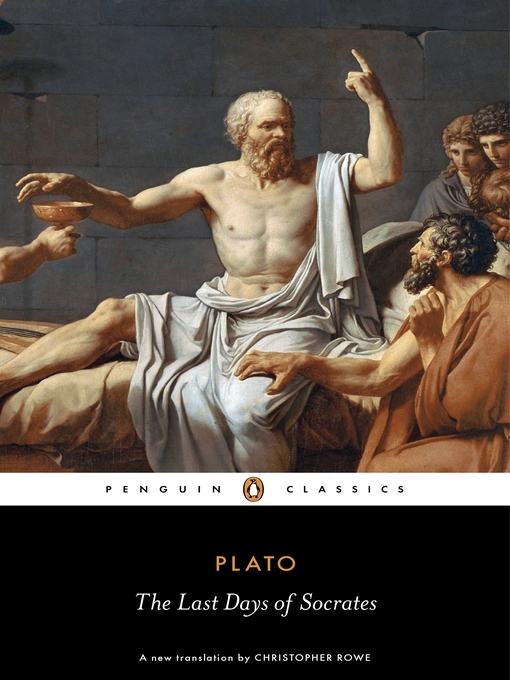
Euthyphro/Apology/Crito/Phaedo
'Nothing can harm a good man either in life or after death'
The trial and condemnation of Socrates on charges of heresy and corrupting young minds is a defining moment in the history of classical Athens. In tracing these events through four dialogues, Plato also developed his own philosophy of a life guided by self-responsibility. Euthyphro finds Socrates outside the court-house, debating the nature of piety, while the Apology is his robust rebuttal of the charges against him. In the Crito, awaiting execution in prison, Socrates counters the arguments of friends urging him to escape. Finally, in the Phaedo, he is shown calmly confident in the face of death.
Translated by HUGH TREDENNICK and HAROLD TARRANT with an Introduction and notes by HAROLD TARRANT
- Arab American Heritage Month
- Autism Awareness Month
- Pretty in Pink (National Pink Day April 10)
- National Librarian Day (April 16) 2026
- National Poetry Month 2026
- Earth Day
- Roll for Reading
- A Bouquet of Books: Fabulous Floral Covers
- NYT Best Sellers 2025
- In Memoriam
- Freedom to Read- Banned Books
- New eBook additions
- Level Up at Your Library!
- See all ebooks collections
- Arab American Heritage Month
- Autism Awareness Month
- National Poetry Month 2026
- A Bouquet of Books: Fabulous Floral Covers
- Pretty in Pink (National Pink Day April 10)
- National Librarian Day (April 16) 2026
- Roll for Reading
- Earth Day
- NYT Best Sellers 2025
- Freedom to Read- Banned Books
- Dive In, If You Dare
- Level Up at Your Library!
- All You Have to Do Is Call: Friendship Reads
- See all audiobooks collections
- #ownvoices / Diverse Books
- Antiracism Resources
- Sheet Music & Song Books
- Bücher auf Deutsch / Books in German
- Civil Service Test Prep
- The Great Courses
- QuickReads Collection
- See all featured collections collections